


Cooking party at your home
from $385 for 8 kids · 2 hours, ages 4–15
The most reliable way to teach kids about healthy eating is to let them handle the food: wash it, measure it, cut it, taste it and put a balanced plate together with their own hands. A cooking-based nutrition lesson turns ideas from a handout into choices children make at the table, and it ties in neatly with the healthy eating content of the Ontario Health and Physical Education curriculum. Below is what such a session covers, lesson themes by grade band, and how Ottawa teachers and parents can set one up.
Bring a nutrition cooking session to class
We teach in your classroom or school kitchen for ages 4–15, up to 10 children per instructor, with one pilot session at a reduced rate.
Request a proposalWhy hands-on food work sticks
Worksheets have a place. They help children name food groups and sort pictures. Cooking adds the moment a child smells a cut pepper, notices how much oil goes into a dressing, or tastes a vegetable they would have pushed aside at home. Those small experiences are what children tend to remember, and they bring them up later at the lunch table and in the grocery store.
Cooking also slows the lesson down in a useful way. A child who has to measure a cup of oats looks at how much a cup really is. A child who builds their own plate has to decide what goes on it and how much. Tasting together also gives the class something specific to talk about afterward. Put simply, a cooking session gives healthy eating a concrete, shared experience the class can refer back to for the rest of the unit.
Where it fits in the Ontario curriculum
Healthy eating is a content area of Strand D, Healthy Living, in the Ontario Health and Physical Education curriculum for Grades 1–8 (2019). A cooking session gives that strand a practical lesson. It also reaches into other subjects: measurement and fractions in math, how ingredients change in science, and reading a recipe as a technical text in language. Tell us which unit your class is on and the menu can lean toward it.
Canada’s Food Guide is a handy general reference for what a balanced plate looks like. A cooking session lets students build that plate from real food and talk about why each part is there.
What a cooking-based nutrition session covers
The balanced plate
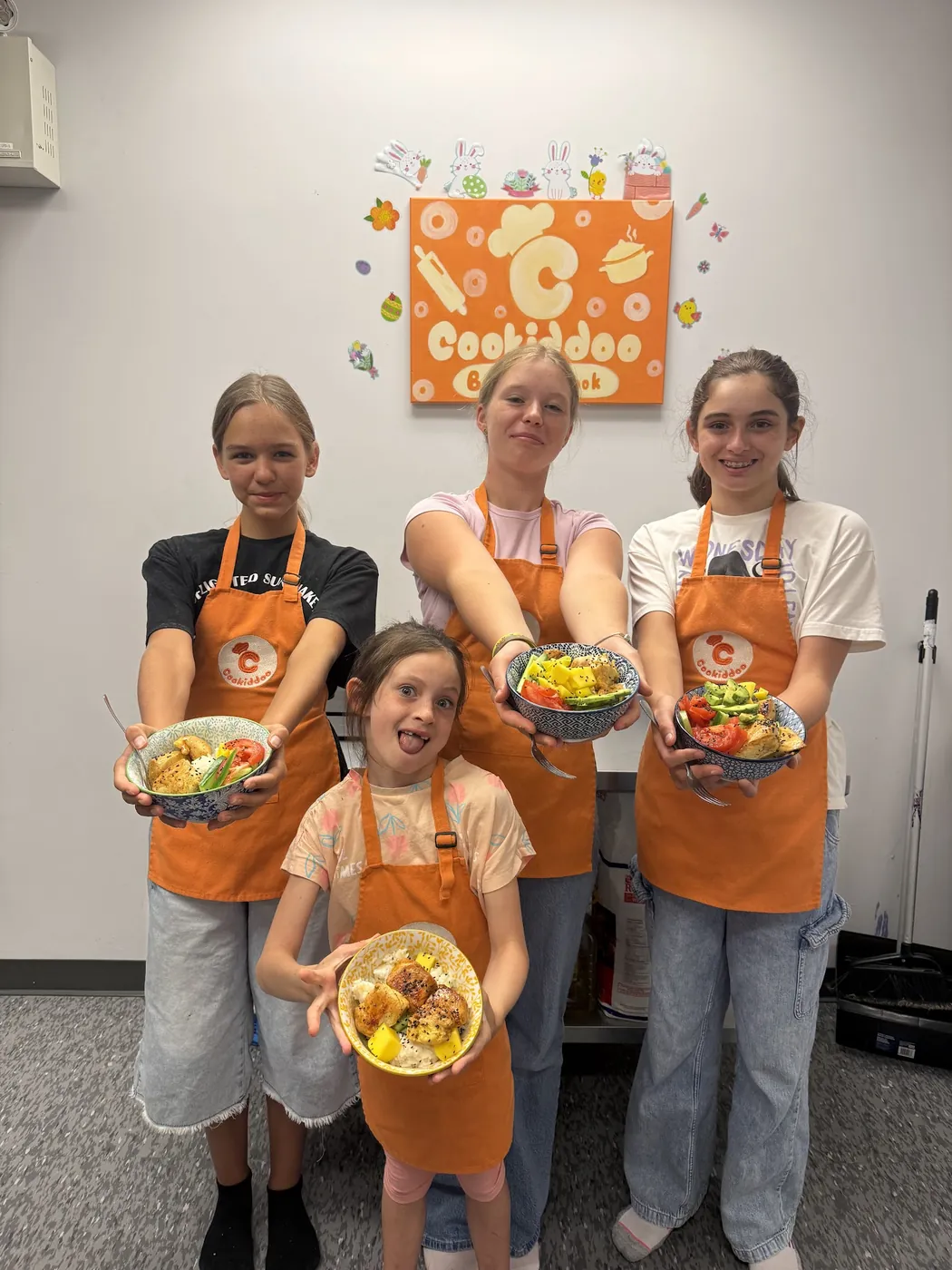
Children sort the ingredients in front of them into vegetables and fruit, whole grains and protein foods, then assemble a plate and compare it with a classmate’s. The goal is a habit of looking at a plate and asking what it has and what it is missing.
Reading a recipe
A recipe is a short technical text with a list, an order and specific verbs. Students read it before they start, predict what each step will do, and check afterward. Younger groups follow picture cues; older students work from the written version.
Measurement
Cups, spoons and scales turn fractions into something children can see and pour. Halving or doubling a quantity becomes a real problem with a real result on the table.
How ingredients change
Mixing, chilling, heating and resting all change food in ways children can observe. Where the room has a kitchen, heat comes into the lesson; where it has tables only, the no-cook format still covers mixing, dissolving and assembling.
Lesson themes by grade band
These are themes we can build a session around. The exact menu depends on the room, the group and every allergy in it, so we confirm it with you before the date.
| Grade band | Lesson theme | What children do | Session length |
|---|---|---|---|
| Kindergarten (ages 4–5) | Colours on the plate; clean hands, clean food | Wash produce, sort by colour, mix and assemble a simple snack | About 45 minutes |
| Grades 1–3 | What goes on a balanced plate; where food comes from | Sort ingredients into groups, follow a picture recipe, measure with cups and spoons | 60–75 minutes |
| Grades 4–6 | Reading a recipe; fractions in the kitchen; how heat changes food | Read and predict steps, halve or double amounts, compare an ingredient before and after | 75 minutes |
| Grades 7–8 | Planning a balanced meal; food safety; cooking for a group | Plan a menu as a team, keep a clean station, divide jobs and plate for others | 75–90 minutes |
Knife skills start at age 7, so from about Grade 2 children can cut with supervision; younger groups mix, shape and decorate. Sessions run in English or French, which suits French-stream and immersion classes across Ottawa.
Planning a session at your school or daycare
Our school and daycare cooking programs come to you. We bring all ingredients, equipment and utensils, tables if the room needs them, and Food Handler certified instructors who run nut-free protocols. Every publicly funded school board in Ontario keeps an anaphylaxis policy under Sabrina’s Law, 2005, and the session follows your board’s rules.
Before you pick a date, gather these details:
- Which room you can hold, and whether it has kitchen access
- Number of students and their ages
- Every allergy and dietary restriction in the group
- The length of the block you can give us and its start time
- The curriculum unit you want the session to support
- One date and one backup date
- English or French
Group size is up to 10 children per instructor, with an assistant from 11 children and a maximum of 30 per session. A short program of 4–6 weeks costs $1,520–$2,280 per group and an after-school program of 8–10 weeks costs $3,040–$3,800 per group, each with up to 10 children included; additional children are $40 per child per session. One-time workshops are available on request, and a single pilot session at a reduced rate lets you see how the class responds. See the full details on our schools and daycares page. For after-school clubs and youth groups outside the school day, the same format runs through our community centre and camp workshops.
Keeping it going at home
Parents can carry the lesson into the week with very little extra effort. Let children pack part of their own lunch and decide what makes it balanced; our list of school lunch ideas kids can make helps with that. For children who are wary of new foods, handling an ingredient before tasting it often lowers the stakes, and our notes on cooking with picky eaters go further.
For children aged 8 to 13 who want more than one session, the Junior Chef Academy in Westboro builds real kitchen skills over 8 two-hour classes. Week 1 covers safety, knife skills and vegetables, and later weeks cover heat control and safe temperatures, so the habits from a school lesson turn into skills a child can use at home.
Junior Chef Academy for ages 8–13
Tuesdays 5:30–7:30 PM at 470 Roosevelt Ave, Westboro: 8 classes, up to 10 children, $715 + HST or two payments of $357.50 + HST.
Reserve a placeHealthy eating lessons land well when children can see, touch and taste what they are learning about. A single cooking session gives a class that shared experience, and a short series lets the habits settle. Send us your grade, room and unit, and we will suggest a session that fits.
What Ottawa parents say
4.629 reviews on GoogleWe visited Cookidoo off-site class and my kids had the greatest time ever! They made chocolate cookies from scratch!
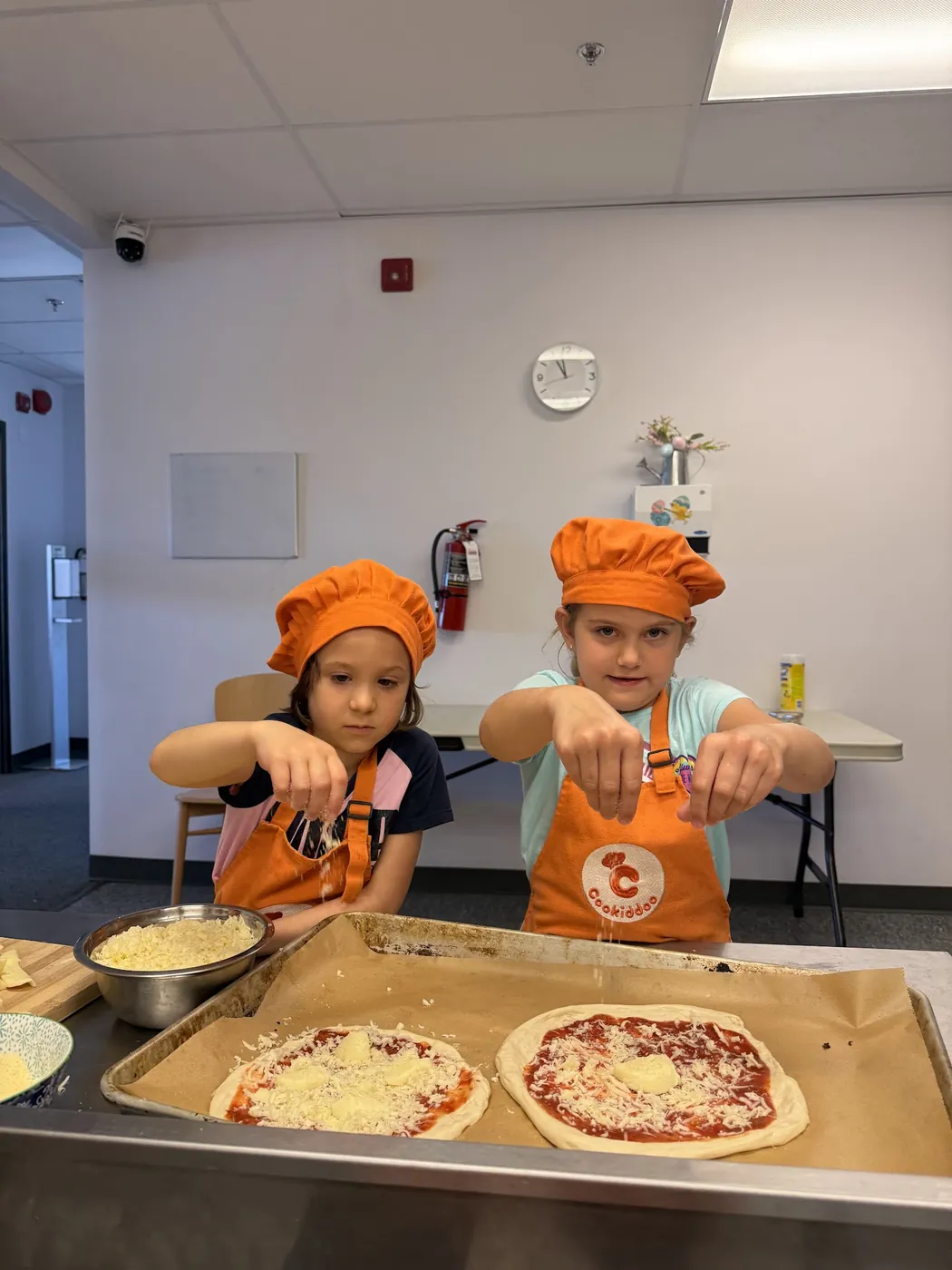
The cooking instructor was patient, kind and did an amazing job teaching the children (ages 4 to 8) and they enjoyed learning to make pizza as well as eating it.
The cooking class was fun, engaging, and organized for the kids. The instructors were patient, enthusiastic, and made every child feel included.

Cooking party at your home
from $385 for 8 kids · 2 hours, ages 4–15