


Junior Chef Academy
$680 + HST · Ages 8–13, up to 10 kids
When the world shifted online in 2020, families across Canada discovered something surprising: kids could actually learn to cook over a screen. What started as a necessity became a genuine option — one that has outlasted lockdowns and changed how parents think about culinary education. Today, online cooking classes for kids are a legitimate, professionally led alternative to in-person studios, and families from Vancouver to Halifax can access the same quality instruction that was once only available in major cities.
Cookiddoo is a Kanata-based cooking school that works only with children, rated 4.6 stars on Google. Its classes run in person, at homes, schools and community centres across Ottawa and Gatineau. For families elsewhere in Canada, this guide covers what a good online cooking class for kids looks like and what to check before you enrol; you can also ask us about current online sessions.
Why Online Cooking Classes for Kids Are Worth It — and Why Free YouTube Isn't Enough
Every parent has tested the YouTube route. You find a “kid-friendly recipe” video, set your child up at the counter, and within eight minutes someone has spilled oil and nobody really knows what “fold gently” means. Free content is abundant; structured teaching is much harder to find.
A class led by a professional instructor offers something fundamentally different:
- Structured curriculum. Each class builds on the previous one. Knife safety comes before sautéing; emulsification comes after a child understands fats. Skills stack intentionally, so a 10-year-old who has completed a full course genuinely knows why a sauce breaks and how to fix it.
- Real accountability. An instructor watches each child's technique in real time, corrects a grip before it becomes a habit, and answers “why does this happen?” in the moment. A video cannot do that.
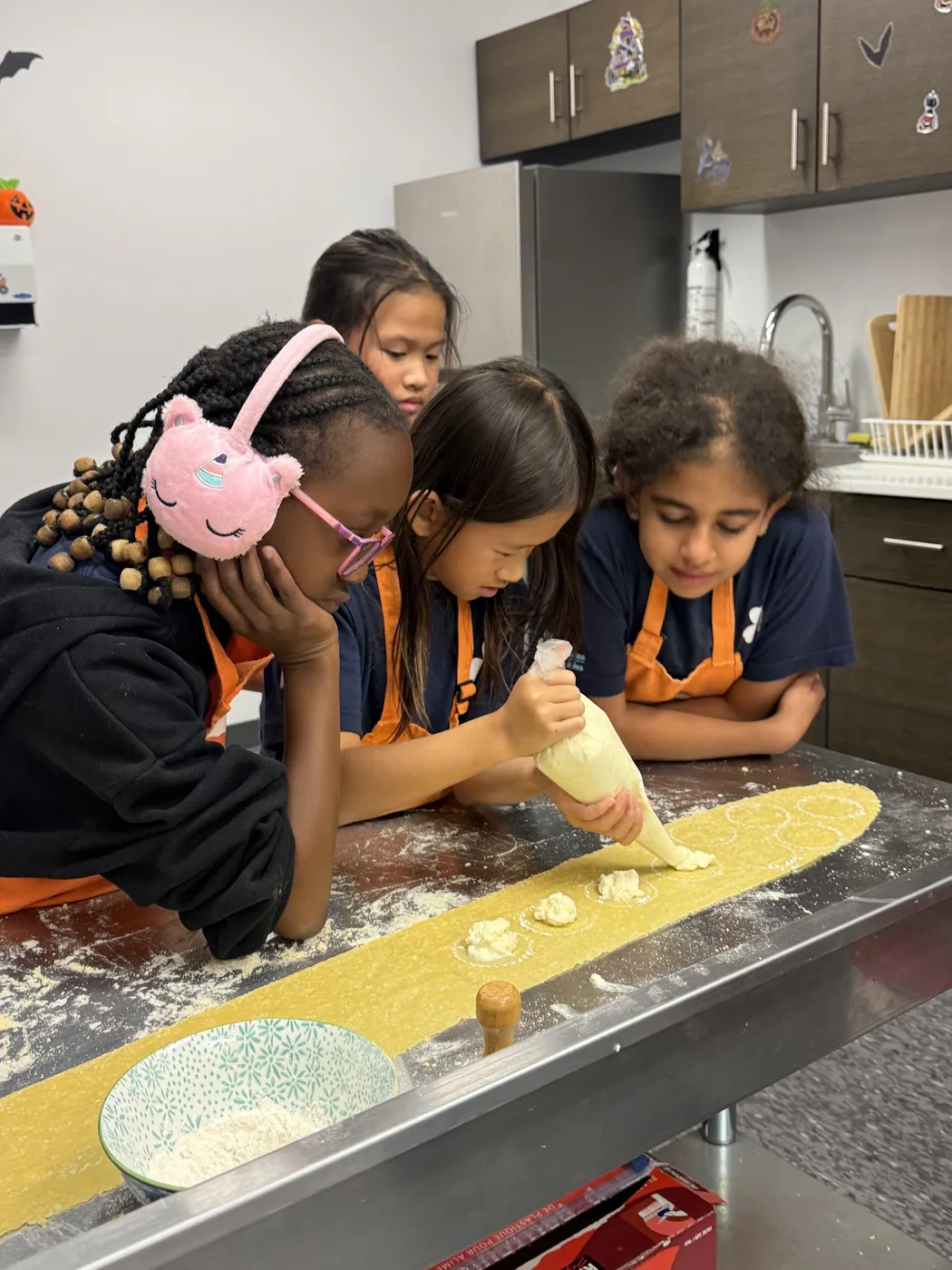
- Small-group learning. Look for a cap of about 10 children per instructor; Cookiddoo keeps that limit in every class. That ratio ensures every child gets attention, including the quiet ones in the virtual room.
- Experienced instructors. A good children’s cooking teacher knows how to explain technique, manage safety, and pace a class for different age groups.
If your child watches the same pasta video six times and still cannot tell you why the water needs to be salted, a structured course is the missing piece.
How Virtual Cooking Classes Work: Equipment, Setup, and Scheduling
Parents often ask what a child needs at home before the first virtual session. The short answer: a standard kitchen and a device with a camera. Here is what to have ready before class starts.
Equipment checklist
- A tablet, laptop, or desktop with a working camera and microphone, positioned to show the workspace
- A stable surface at the child's height — a step stool helps younger kids reach the counter safely
- Ingredients pre-measured as listed in the class prep sheet; a good program sends one ahead of each session
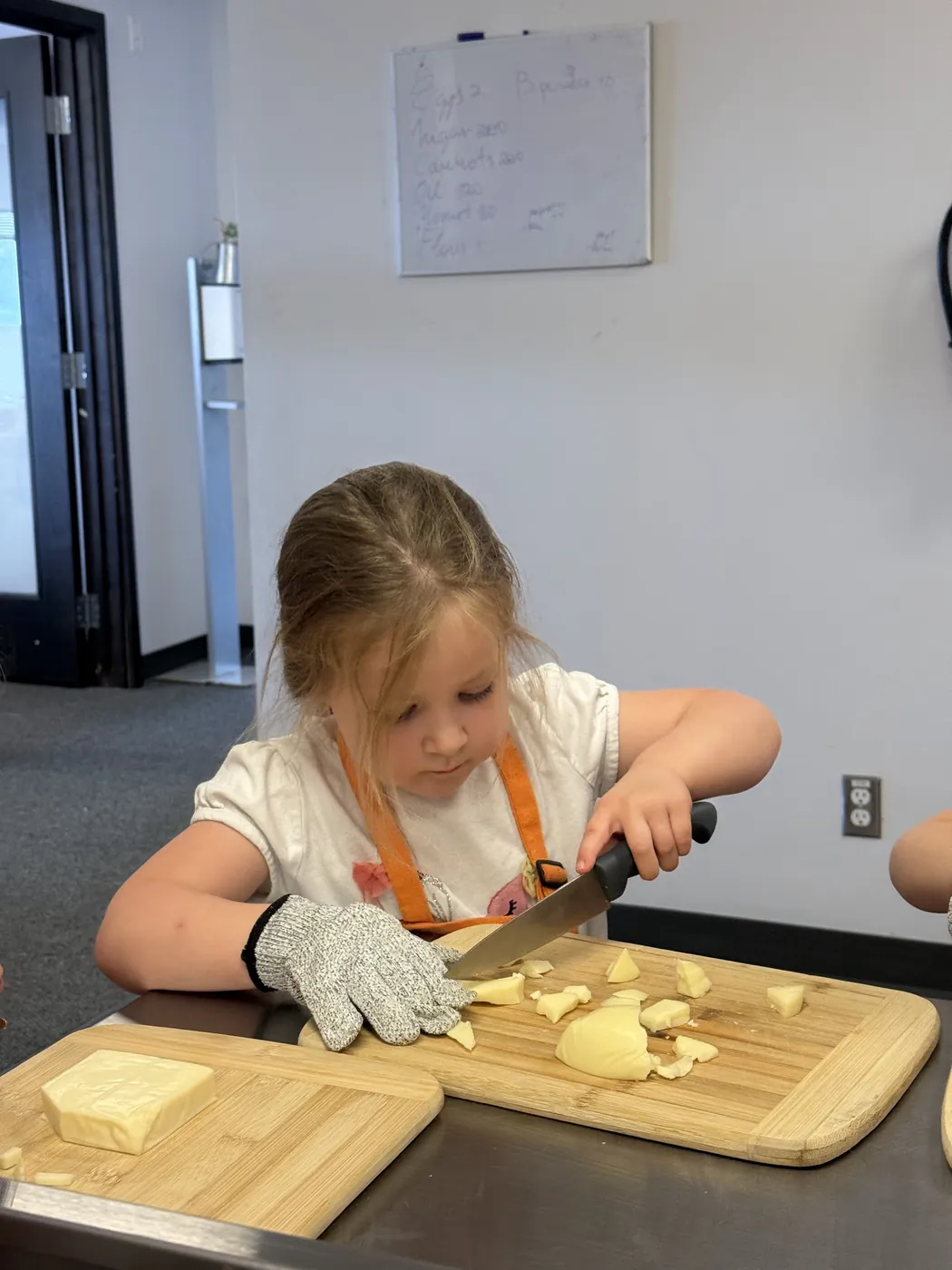
- Age-appropriate tools: a child-safe knife for ages 6+, measuring cups, a mixing bowl, and a baking sheet or small pan
- An adult at home for the first session, and for any class with children under age 6
How a class unfolds
Sessions run for approximately two hours. The instructor opens with a technique demonstration, explains the “why” behind each step, then guides the group through preparation in real time. Kids work at their own pace while the instructor monitors screens and checks in with each participant. The session closes with a plating demonstration and a brief discussion of what went well. Children eat what they make — arguably the best motivator in culinary education.
Scheduling flexibility
Online sessions can accommodate families across Canadian time zones, and weekend and after-school slots are common. That makes a virtual class a practical option for families in smaller cities and rural communities with no local cooking instruction for children. Confirm the time zone of each slot before you book.
Age groups and course levels
Good programs group children by developmental stage. Younger children (ages 4–6) focus on measuring, mixing, and basic safety. Older groups tackle knife skills, stovetop techniques, and multi-component dishes. Cookiddoo groups its classes the same way across ages 4 to 15.
French-language option
A French-language option matters for francophone families across Canada — from Gatineau to Moncton to the Franco-Ontarian communities of Northern Ontario. Cookiddoo teaches in English and French; ask which language a given session runs in.
Online vs. In-Person: Which Is Right for Your Child?
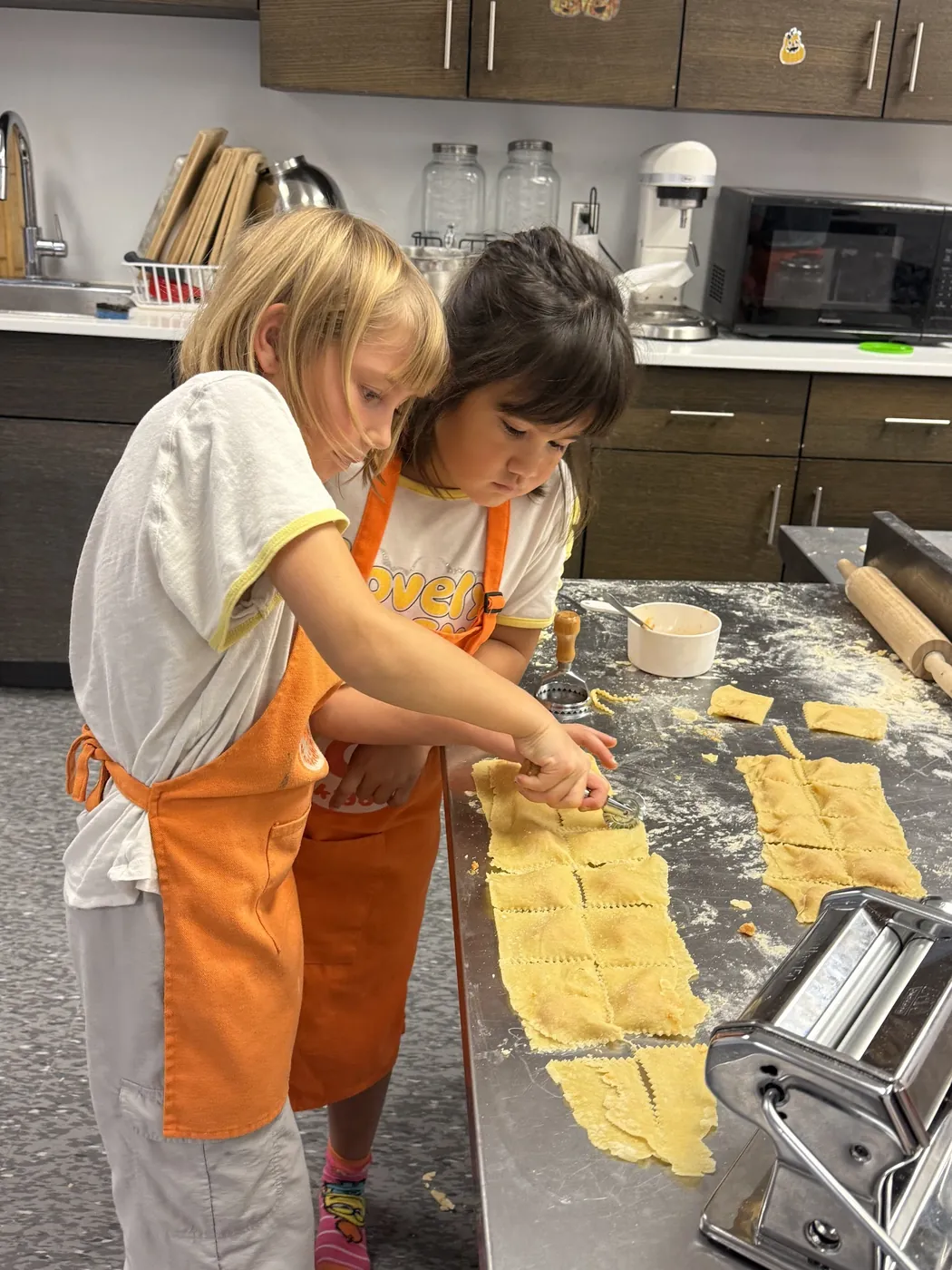
If you are in the Ottawa area, the in-person class comes to you: a Cookiddoo instructor brings a private class to your home, school or community centre, with the full sensory experience — shared excitement, the smell of something baking, and the social energy of working alongside other kids. Cookiddoo’s weekly Junior Chef Academy runs in Kanata, and culinary camps run during school breaks.
For families outside Ottawa, online classes remove the commute entirely. Check that the instruction quality, the group-size cap and the instructor’s experience match what you would expect in person.
Online classes also work well as a gift. A grandparent in another city can give a child a class, and families within Ottawa can give a class at home through a Cookiddoo gift card.
One practical advantage of online: if a child misses a session due to illness or a schedule conflict, many programs let families reschedule with advance notice.
Frequently Asked Questions
What age can my child start online cooking classes?
Most children can start around age 4 with an adult beside them. The youngest group (ages 4–6) works on foundational skills — measuring, stirring, and simple assembly — with an adult present at home. From about age 7, children can follow an instructor on screen more independently. Cookiddoo’s classes run up to age 15, with more advanced techniques at each level.
Do I need special equipment at home?
No special equipment is required. A standard home kitchen, a device with camera and microphone, and the ingredient list are all that is needed. A good program sends a prep sheet for every class with exact quantities and any substitutions, so the start of the session goes smoothly.
Can families outside Ottawa take a class with Cookiddoo?
Write to info@cookiddoo.com to ask about current online sessions and time slots. Cookiddoo’s regular classes run in person across Ottawa and Gatineau, at your home, school or community centre.
How many kids are in each session?
Cookiddoo caps every class at 10 children per instructor. That small group is what lets the instructor watch each child’s technique and correct it in real time; look for a similar cap in any online program.
Is a parent required to be home during the class?
For children ages 4–6, a parent or caregiver should be present and available to assist. For ages 7 and up, children can participate more independently, and it helps if a parent is reachable in the home, particularly for first-time participants. The instructor should open each session with a safety briefing.
Can I give an online cooking course as a gift?
Yes. A cooking class makes an excellent birthday or holiday gift, especially from a relative who lives in another city. Cookiddoo gift cards and class certificates are sold online; for a child outside Ottawa, ask us about online sessions before you buy.
Does Cookiddoo teach in French?
Yes. Cookiddoo teaches in English and French. Write to info@cookiddoo.com to ask about current French-language sessions.
How is Cookiddoo different from a one-time online cooking event?
Single-session cooking events, common around holidays, teach one recipe. Cookiddoo’s Junior Chef Academy is an 8-week course where each class builds on the last, so by the end a child has a set of skills to use at home. That cumulative structure is what produces real cooking competence.
Ask About a Class for Your Child
Cookiddoo teaches small groups of no more than 10 children, in English or French. In Ottawa and Gatineau the class comes to your home, school or community centre. For families elsewhere in Canada, write to us about current online sessions and course levels matched to your child’s age.
Contact Cookiddoo:
- Phone: +1 613 710 0554
- Email: info@cookiddoo.com
- Website: cookiddoo.com
- Based in Kanata: 301-150 Katimavik Rd, Kanata, Ottawa, K2L 2N2
Groups are capped at 10 children, which is what makes each session worth taking.

What Ottawa parents say
4.629 reviews on GoogleMy son attended several cooking classes at Cookiddoo, and he loved every one of them. He’s now a much more confident and capable helper in the kitchen, which has been amazing to see.
The instructors were incredibly engaging and patient with the kids. It is a wonderful, interactive way for children to learn new skills and build confidence in the kitchen.
My daughter attended one of their classes and made a delicious lasagna completely from scratch. I was truly impressed with what she accomplished.
Junior Chef Academy
$680 + HST · Ages 8–13, up to 10 kids