


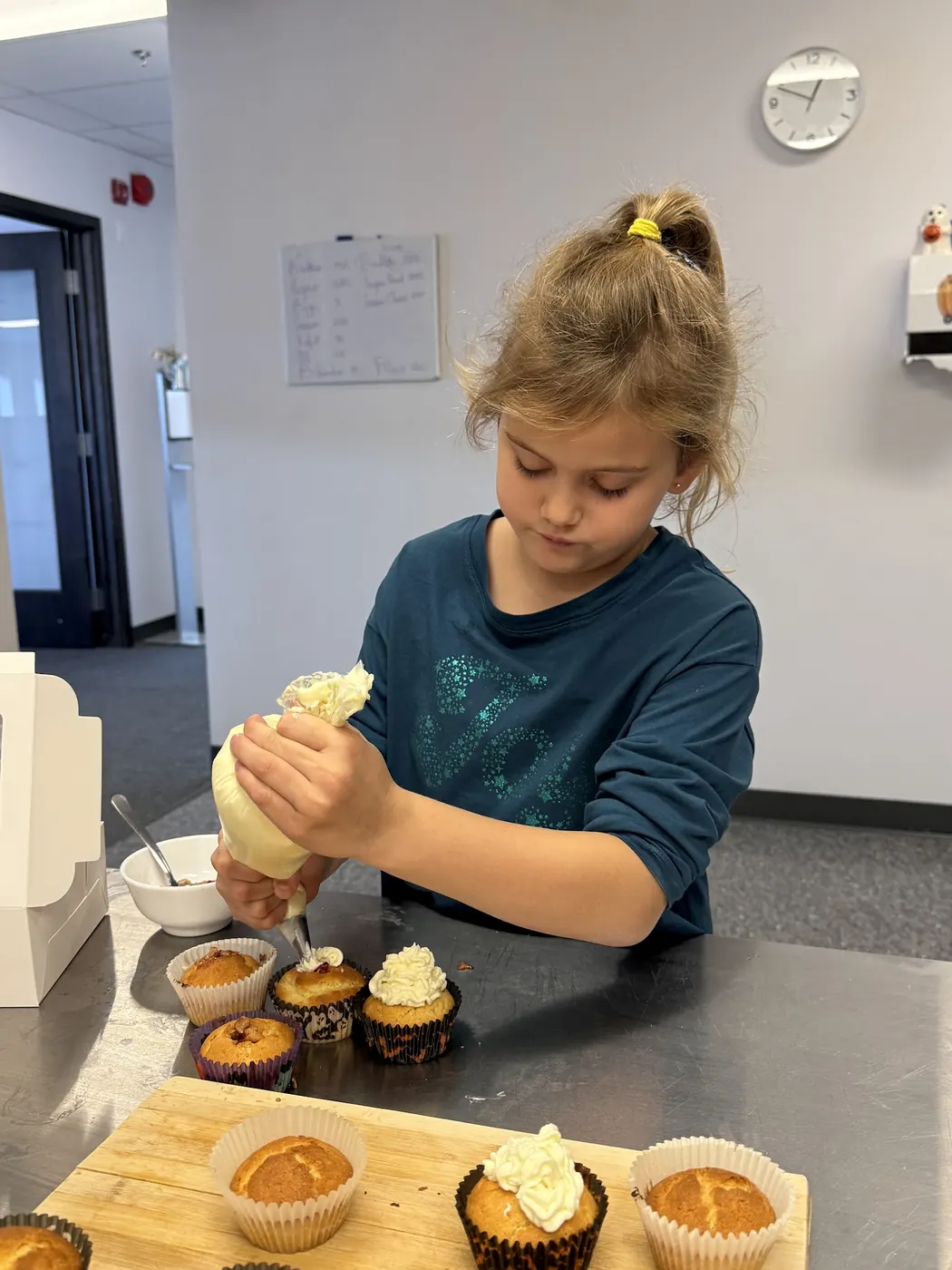
Cooking party at your home
from $385 for 8 kids · 2 hours, ages 4–15
A franchise disclosure document is the package a franchisor must give you before you sign a franchise agreement or pay any money for it. In Ontario you must receive it at least 14 days before the earlier of those two steps, and it must contain all material facts, the prescribed financial statements and copies of every proposed agreement, under section 5 of the Arthur Wishart Act (Franchise Disclosure), 2000.
This checklist follows the contents that Ontario’s regulation, O. Reg. 581/00, prescribes, grouped into four reading passes: the franchisor, the money, the operations and the people. It is general information for parents, teachers and other first-time buyers. Have a franchise lawyer review any document you actually receive.
What a disclosure document is in Canada, and how it differs from a US FDD
In Canada, franchise disclosure is a provincial matter, as the Canadian Franchise Association explains. Seven provinces have franchise disclosure legislation: Alberta, Ontario, Prince Edward Island, New Brunswick, Manitoba, British Columbia and, since June 30, 2026, Saskatchewan, according to the Government of Saskatchewan. Quebec is absent from that list. There, franchise contracts fall under the general rules of the Civil Code of Québec, which requires good faith from both parties (article 1375).
Each province sets its own contents. Ontario’s list sits in the Act and in O. Reg. 581/00. British Columbia’s Franchises Act requires all material facts on top of the prescribed statements and documents (section 5(5)). Alberta’s Franchises Act requires copies of all proposed franchise agreements and financial statements (section 4(3)). Our guide to franchise laws by province compares the seven Acts.
“FDD” with numbered Items is the American format. Some US brands point buyers to specific Items: the Code Ninjas franchise site cites Item 7 of its FDD for its startup estimate, and The Real Food Academy refers readers to Items 7 and 19. Ontario’s Act applies whenever the franchised business will operate partly or wholly in Ontario (section 2(1)), so a brand that uses an FDD at home still has to cover Ontario’s list for an Ontario location. Read the Canadian document you receive against the Canadian rules.
Before you open it: one document, delivery and the 14-day clock
Check how and when the document reached you before you read a single page.
- One document, one delivery. Ontario requires the disclosure document to be one document, delivered at one time (Act, section 5(3)). Pieces sent over several weeks are worth raising with your lawyer.
- Delivery method. The Act allows personal delivery, registered mail or another prescribed method (section 5(2)), and the regulation allows electronic transmission when its conditions are met (O. Reg. 581/00, s. 12). In British Columbia the Act names email directly (section 5(2)).
- The 14-day clock. In Ontario, British Columbia and Alberta you must receive the document at least 14 days before the earlier of signing any agreement relating to the franchise or paying any consideration for it. Ontario’s Act carves out a refundable deposit up to a prescribed amount, given under an agreement that does not bind you to buy the franchise, and agreements that only deal with confidentiality or a location, site or territory (section 5(1)–(1.1)). Write down the date the document arrived and keep the envelope or email.
Ontario also requires all information in the document to be set out accurately, clearly and concisely (Act, section 5(6)). When a section is hard to follow, ask the franchisor to explain it in writing.
Pass 1: who the franchisor is
Start with the company you would be tied to for the length of the agreement.
- Business background. The document states how long the franchisor has been in this line of business and how long it has offered franchises in it (O. Reg. 581/00, s. 2). Years of running the business and years of selling franchises are two separate numbers. Compare them.
- Ten-year record. It must say whether, in the ten years before the document’s date, the franchisor, its associate, or a director, general partner or officer was convicted of fraud, unfair or deceptive business practices, or a violation of a law that regulates franchises or business, and whether such a charge is pending (s. 2, para. 3).
- Financial statements. Expect an audited financial statement, or a review-engagement statement, for the franchisor’s most recently completed fiscal year (section 3(1)). A franchisor that has operated for less than one fiscal year includes its opening balance sheet (section 3(3)).
- The net-worth exemption. Large franchisors can leave the statements out when they meet several criteria, including a net worth of at least $5,000,000, or $1,000,000 when a corporation worth at least $5,000,000 controls them (O. Reg. 581/00, s. 11(1)). If the statements are missing, ask which exemption the franchisor relies on and how it qualifies.
Read the statements with an accountant. Look at cash, debt and how much of the franchisor’s income comes from selling new franchises compared with supporting existing ones.
Pass 2: the money
Read this part with a calculator and a list of local quotes.
- Establishment costs. The regulation asks for a list of all the franchisee’s costs associated with the establishment of the franchise: deposits and initial payments to the franchisor and whether each is refundable, plus estimates for inventory, leasehold improvements, equipment and leases, with the assumptions behind them (O. Reg. 581/00, s. 6, para. 1). Check each estimate against a quote from a supplier or landlord in your own city.
- Earnings projections. If the franchisor provides one, the document must state its reasonable basis, the assumptions and a location where you can inspect the information that supports it (s. 6, para. 3). Go and inspect that information.
- Advertising fund. When franchisees must contribute to an advertising fund, the document reports how the fund was spent and how much was kept (s. 6, para. 6). Ask what local marketing you will still pay for yourself.
- Supplier prices. Every Ontario document carries a statement that goods and services bought under the agreement may cost more than the lowest price in the market (s. 4, para. 4). Ask which purchases are mandatory and from whom.
The document describes what it takes to open. Your budget has to cover the months after opening too: the CFA’s buyer guidance asks whether you have working capital and emergency capital to keep earning a living in slower times. Our page on what it costs to open a kids cooking business lists the lines to price for that kind of business.
Pass 3: the operations
- Training. The document describes training and other assistance, says whether training is mandatory, and if it is, who pays for it (O. Reg. 581/00, s. 6, para. 5). Ask how long it lasts, where it happens and whether staff you hire later can attend.
- Licences and permits. It must describe every licence, registration or permit you need under federal or provincial law or a municipal by-law to run the franchise (s. 6, para. 10). For a children’s food business, compare that list with what your local public health unit and the schools you plan to serve ask for. At Cookiddoo in Ottawa, instructors hold Food Handler certification, as the school and daycare program page states.
- Territory. If the agreement reserves an area for you, the document describes it and the conditions for keeping it (s. 6, paras. 12–13). Read those conditions next to any sales targets in the agreement.
Pass 4: the people
The document lists the Ontario franchisees who left the system in the last fiscal year, the reasons for each closure of this type of franchise over the three previous fiscal years, and the locations of all Ontario franchises of this type; when there are fewer than 20 in Ontario, the list adds the franchises geographically closest to Ontario until it reaches 20 (O. Reg. 581/00, s. 6, paras. 15–17). Near its start, every Ontario document also tells you that you are strongly encouraged to contact current or previous franchisees before you sign (s. 4, para. 3).
Call them, and pick the names yourself, including people who left. Questions to ask a franchisor’s current and former franchisees:
- How close were your real opening costs to the estimates in the document?
- How many months passed before the business paid you a salary?
- Did the training prepare you for your first month of operating?
- What does the franchisor do well, and what would you change?
- Would you sign again? For people who left: why did you leave?
The CFA also suggests speaking with suppliers, landlords and customers, and doing your due diligence with a franchise lawyer, an accountant and a banker.
After delivery: material changes, the certificate and independent advice
- Material change. If a material change happens after delivery, the franchisor must give you a written statement of it as soon as practicable, and you must receive that statement before you sign or pay (Act, s. 5(5)). Right before signing, ask in writing whether anything has changed since the date on the document, and keep the answer.
- The certificate. The document includes a signed and dated certificate stating that it contains no untrue information and includes every item the Act and regulation require (O. Reg. 581/00, s. 7). Check that it is signed.
- Mediation. Every document includes a statement that mediation is a voluntary process to resolve disputes with an independent third party (s. 5(2)).
- Independent advice. Ontario documents state at the beginning that you should get independent legal and financial advice before entering into the agreement (s. 4, para. 2). Hire a lawyer and an accountant who work for you.
Late or incomplete disclosure has consequences in Ontario. If the document or a statement of material change arrived late, or the document did not meet the content requirements of section 5, the franchisee may rescind without penalty within 60 days after receiving the disclosure document; if no document was ever provided, within two years of entering into the agreement (Act, s. 6). The Arthur Wishart Act guide covers rescission and exemptions in detail.
Red flags and a printable checklist
The CFA warns that a franchisor cannot promise a specific revenue or income for a location and calls overpromising a huge red flag. Add these signs from the rules above: pressure to sign or pay before 14 days have passed, financial statements missing with no exemption explained, a document delivered in pieces, a franchisee list with no former owners, and a budget that ends on opening day with no working capital.
| Pass | What to check | Rule (Ontario) | Done |
|---|---|---|---|
| Before | Received as one document, at one time | Act s. 5(3) | ☐ |
| Before | Received at least 14 days before signing or paying; date written down | Act s. 5(1) | ☐ |
| 1. Franchisor | Years in the business and years offering franchises | Reg. s. 2 | ☐ |
| 1. Franchisor | Ten-year convictions and pending charges | Reg. s. 2 | ☐ |
| 1. Franchisor | Audited or review-engagement statement, opening balance sheet, or a stated exemption | Reg. s. 3, s. 11 | ☐ |
| 2. Money | Every establishment cost listed; refundability of each payment to the franchisor | Reg. s. 6 | ☐ |
| 2. Money | Basis, assumptions and inspection location for any earnings projection | Reg. s. 6 | ☐ |
| 2. Money | Advertising fund report, if you must contribute | Reg. s. 6 | ☐ |
| 2. Money | Working and emergency capital in your own budget | CFA guidance | ☐ |
| 3. Operations | Training: mandatory or optional, and who pays | Reg. s. 6 | ☐ |
| 3. Operations | Every licence and permit you need | Reg. s. 6 | ☐ |
| 3. Operations | Territory description and conditions for keeping it | Reg. s. 6 | ☐ |
| 4. People | Franchisees who left, closure reasons over three years, location list | Reg. s. 6 | ☐ |
| 4. People | Calls made to current and former franchisees | Reg. s. 4 | ☐ |
| After | Certificate signed and dated | Reg. s. 7 | ☐ |
| After | Written statement for any material change, before signing or paying | Act s. 5(5) | ☐ |
| After | Review by your own lawyer and accountant | Reg. s. 4 | ☐ |
Where Cookiddoo stands
Cookiddoo runs kids cooking programs in Ottawa today: mobile birthday parties at home from $385 for 8 children (+$40 per extra child), school and daycare programs from $1,520 per group, and the Junior Chef Academy course for ages 8 to 13. Cookiddoo is collecting expressions of interest from people who would like to run its programs in other cities. You apply, Cookiddoo reviews the fit and sends an information package, and any documents your province requires come before any agreement or payment. To start, request the Cookiddoo franchise information package.
This page is general information based on the Ontario e-Laws consolidation current to October 22, 2026. Have a franchise lawyer review any disclosure document and agreement you receive before you sign or pay.
- Send a short application: who you are, your city and your experience.
- Cookiddoo reviews the fit and sends the information package.
- Any disclosure document your province requires comes before any agreement or payment.
This page is general information. Have a franchise lawyer review any actual agreement.
What Ottawa parents say
4.629 reviews on GoogleWe visited Cookidoo off-site class and my kids had the greatest time ever! They made chocolate cookies from scratch!
The cooking instructor was patient, kind and did an amazing job teaching the children (ages 4 to 8) and they enjoyed learning to make pizza as well as eating it.
The cooking class was fun, engaging, and organized for the kids. The instructors were patient, enthusiastic, and made every child feel included.



Cooking party at your home
from $385 for 8 kids · 2 hours, ages 4–15